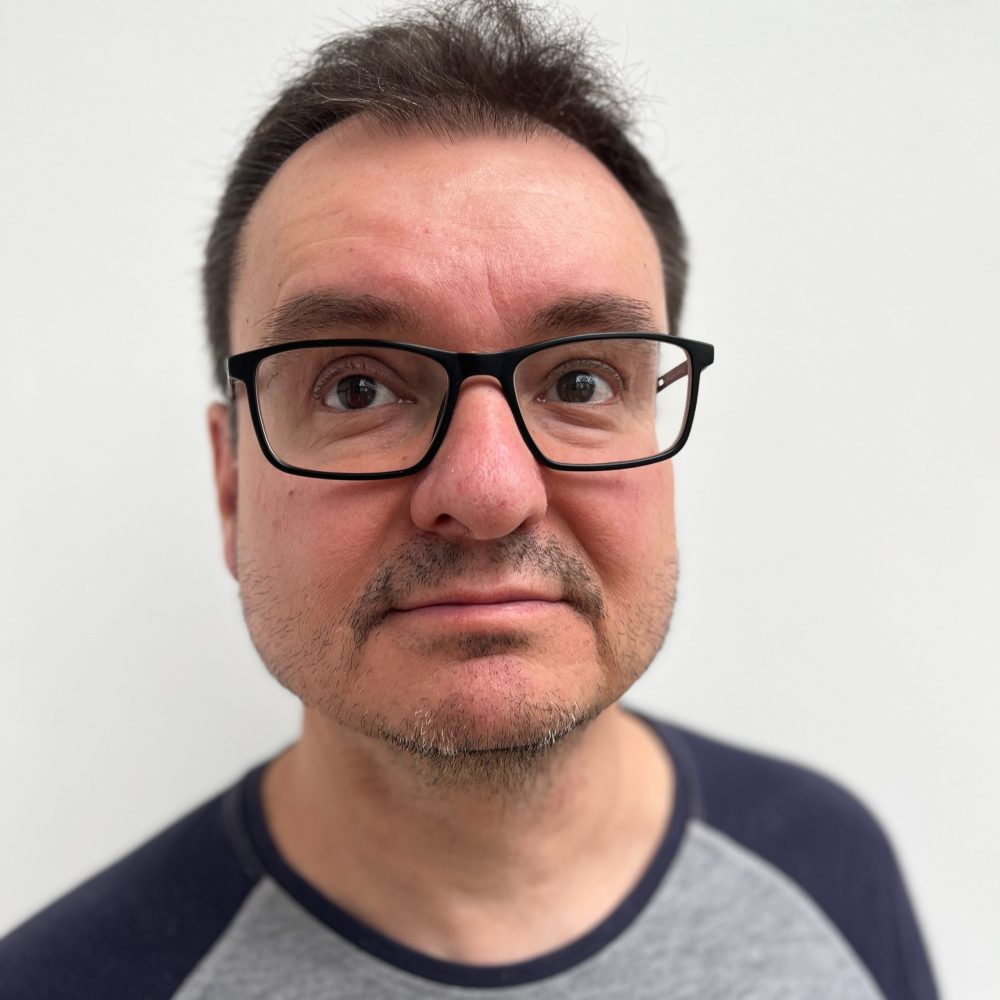
Alexandre R.J. Francois
Independent
Interactions Intelligence
About Me
Alex is a computer scientist and software engineer. His academic research focused on the modeling and design of interactive (software) systems, as an enabling step towards the understanding of perception and cognition. His interdisciplinary research projects explored interactions within and across music, vision, visualization and video games. After working in startups and larger companies for several years, he has recently dedicated some week-ends and extended holidays to the pursuit of real-time, low latency, high temporal and frequency resolution spectral analysis of audio (and other) signals. www.alexandrefrancois.org
Sessions
-
Low Latency, High Temporal and Frequency Resolution Spectral Analysis of Audio Signals
All About That Phase10:00 - 10:50 UTC | Tuesday 10th November 2026 | ConservatoryBeginnerIntermediateAdvancedThis talk presents extensions to the Resonate model introduced last year for the real-time computation of high temporal resolution spectrograms with low latency. By using phase information, starting with known techniques from the world of phase vocoder, it is possible to go further, namely estimate and track instantaneous frequencies, build tracking resonators and self-tuning resonator banks, and accurately extract the frequency components actually present in the input signal. The Resonate model allows to implement and use vocoder techniques more effectively and efficiently than traditional FFT-based implementations. The talk outlines and illustrates the theory, addresses efficient implementation, and showcases applications from […]
-
Real-Time, Low Latency and High Temporal Resolution Spectrograms
09:00 - 09:50 UTC | Tuesday 11th November 2025 | Bristol 3BeginnerIntermediateAdvancedThis talk describes the proof of concept implementations of Resonate, a low latency, low memory footprint, and low computational cost algorithm to evaluate perceptually relevant spectral information from audio signals. A walk through the open source Swift, C++ and Python implementations outlines the basic principle of the algorithm, highlights critical implementation design elements and areas for potential improvements. The talk also features a few illustrative real-time audio analysis applications.