Build Your Own Shazam
Audio Fingerprinting from First Principles
Audio fingerprinting is one of the most successful real-world applications of audio signal processing. It powers music recognition systems such as Shazam, enabling reliable identification of songs from short, noisy recordings in a few seconds. While many audio developers are familiar with audio fingerprinting in practice, the underlying techniques are often encountered only at a high level. In this hands-on workshop, participants will build a complete audio fingerprinting engine based on Avery Wang’s landmark 2003 Shazam paper. Starting with raw audio, we will progressively construct the identification pipeline: generating spectrograms, detecting robust spectral landmarks, creating constellation maps, producing landmark hashes, building a lookup database, and performing audio matching through offset clustering. Rather than treating audio fingerprinting as a black box, the workshop develops the underlying signal-processing principles and connects them to the system-level structure of a working audio fingerprinting pipeline. Using a subset of the GTZAN dataset and provided starter code, attendees will experiment with different parameters and observe how these choices influence matching behavior and retrieval accuracy

Emma Fitzmaurice
QA Engineer
Focusrite - Novation
Emma Fitzmaurice is a QA engineer on the Novation team at Focusrite, sticking her fingers into as many parts as the hardware development pie as possible in an effort to make cool gear. She also helps run Dynamic Cast, a peer-to-peer study group for underrepresented people in programming.
She is charming, beautiful, wise and the proud author of her own bio.
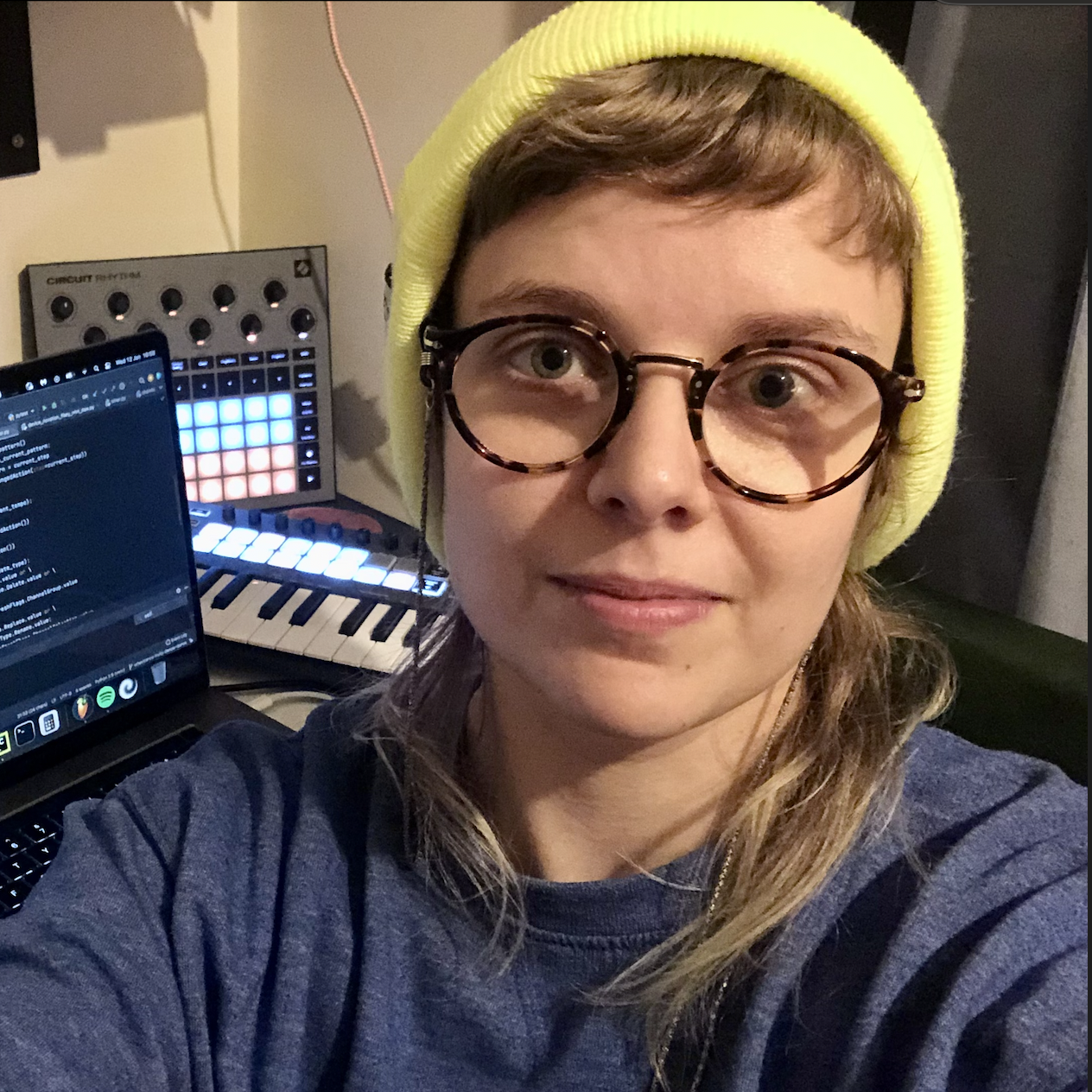
Julia Läger
Software Developer
Focusrite PLC
Julia is a Software Developer with 9+ years experience writing C++ production code, working previously in automotive and now in music tech at Focusrite. But she also really likes Python. She's currently working on internal tooling, which involves a potpourri of domains and technologies, going from high-level desktop applications down to embedded libraries. She's passionate about music and science, and actually has a background in experimental nano physics. In her free time she slaps the bass and roller skates.
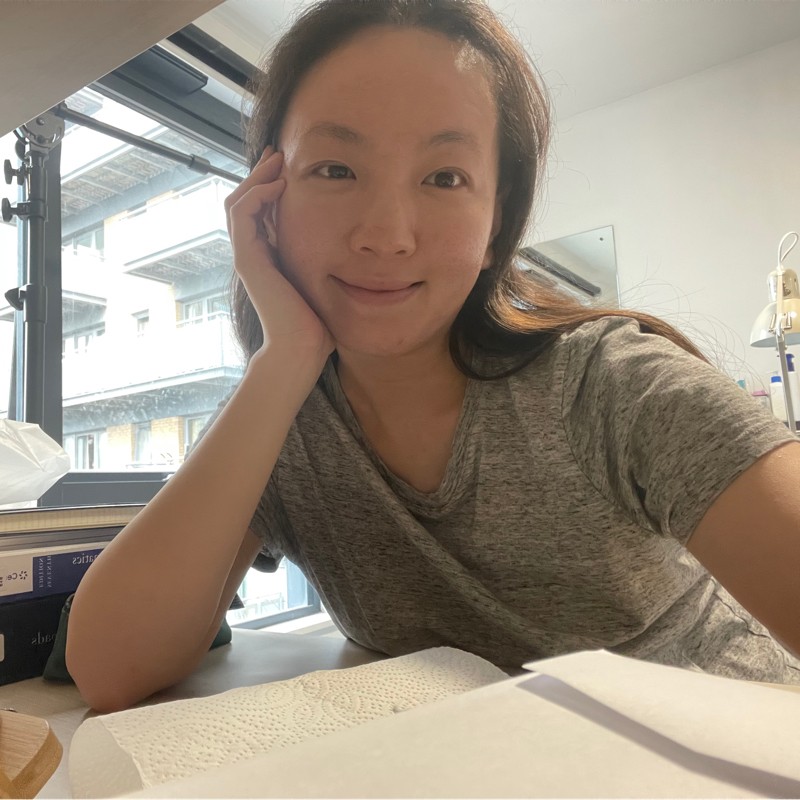
Sohyun Im
Research Assistant
Queen Mary University of London
Sohyun Im is a Research Assistant at the Centre for Digital Music, Queen Mary University of London, where she is working on the Universal Acoustic Vision project in partnership with Meta Reality Labs. Her current research focuses on multichannel audio processing, acoustic imaging, machine learning, and real-time spatial audio systems for wearable devices.
She received her Master of Science in Sound and Music Computing from Queen Mary University of London, where her dissertation explored music structure analysis using machine learning. She also holds a Bachelor of Science in Sound Engineering from the University of West London, where her final-year project focused on virtual analogue modelling.
Outside her research, Sohyun has been actively involved in two London-based communities: Dynamic Cast, a peer-to-peer C++ study group supporting people underrepresented in technology; and the Oxford and Cambridge Musical Club, where she performs as a classical pianist.

Simeon Joseph
Student
University of Westmisnter
Previous guest speaker for the Dynamic Cast workshop in ADC2025, with a strong interest in Digital Signal Processing and embedded software development. Current student at University of Westminster, studying Software Engineering with Electronics. Main creator behind the Cinamark Youtube channel, showcasing the building process of many different project on different architectures.
Born and raised in Saint Lucia, located in the Caribbean, Simeon has been around and has been influenced by numerous styles of music, which cemented his passion for audio, especially when it comes to the technology side. Resulting in a final year project for Community College in the form of a RMS Compressor/Noise Gate/Limiter Desktop Application for their final year project on the Associate's Degree course for Computer Systems Engineering.
Write and composes music during non academic times (really likes guitars and synthesisers specifically. Prophet V5 and NI Massive enthusiast)

Denise Azucena
Software Developer - Machine Learning
Independent
Denise is an audio engineer with over 5 years of experience in adverts, short films, and audiobooks. She holds an MSc in Sound and Music Computing from Queen Mary University of London, where she focused on AI and data science. She now works as a freelance software developer focused on machine learning, with a strong interest in audio programming and sound design.
Combining her deep domain knowledge of sound with machine learning and audio information retrieval, she draws on her post-production experience to build software tools that address real pain points in the industry.