Asp
Designing a Modular, Accessible and Open Sequencer Platform
Most music control devices assume a one-size-fits-all approach, which disadvantages people who do not fit an assumed norm. But the availability of powerful open hardware ecosystems like Raspberry Pi means that we can now create feature-packed controllers at a low cost and rapid pace. This opens the door to making hackable, modular devices that can be tailored to specific needs and use cases.
In this talk, we describe Asp: the Accessible Sequencer Platform. Asp is a MIDI/CV step sequencer for real-time composition and performance. Its features include algorithmic generators and note effects, parameter LFOs, live recording, Ableton Link clock sync, scale support, CV control and note triggers, MIDI DIN in/out and sync, plus a project management API.
What sets Asp apart is that:
- The software stack is completely modular, supporting multiple different hardware devices, using open formats throughout (JSON, YAML, etc)
- It is designed with accessibility as a first-class principle, co-designed by a blind and sighted developer duo, with native text to speech support
- All high-level logic is written in Python, which makes it easy to hack and modify, with C++ modules for hard real-time tasks such as CV audio synthesis
- All code is free and open-source
In this talk, we'll discuss:
- The lifecycle of the project, from its inception at ADC 2024, through to end-to-end hardware prototype
- Designing with (and for) a multiplicity of different abilities, mindsets, and scenarios
- Our design philosophy, and how it has evolved over time
- Key components of Asp's Python software stack (Timeline, CV I/O, etc), and how to use them in your own projects
- The future project roadmap
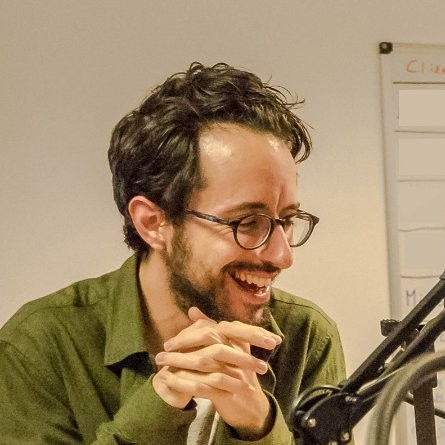
Daniel Jones
Creative technologist